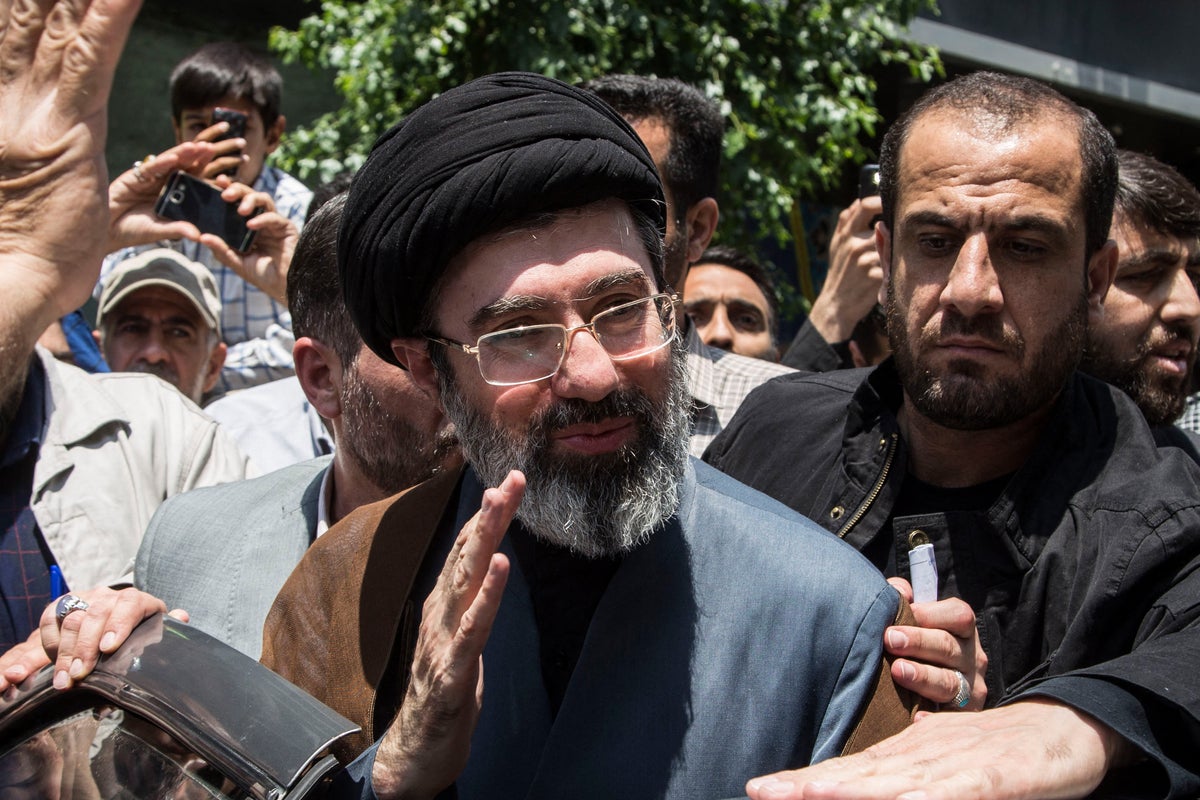
Mojtaba Khamenei Takes Helm as Iran War Enters Day 10, Escalating Regional Tensions
As the conflict in the Middle East enters its tenth day of intense direct confrontation, a pivotal leadership change within Iran has sent ripples across the globe. Mojtaba Khamenei, the influential second son of the late Supreme Leader Ayatollah Ali Khamenei, has been officially named Iran's new Supreme Leader. This appointment comes amidst a rapidly escalating iran war, which has transitioned from years of proxy skirmishes to direct military engagements between the United States, Israel, and Iran, along with its formidable network of allied militias. The world watches with bated breath as a new era of Iranian leadership begins under the shadow of an expanding war, further complicating an already volatile geopolitical landscape.
A New Supreme Leader Amidst Deepening Conflict
The ascension of Mojtaba Khamenei to Iran's highest office marks a significant moment for the Islamic Republic, particularly as the nation is embroiled in a full-scale conflict. Iranian state media confirmed his appointment, highlighting a succession plan that many analysts had anticipated for years. Mojtaba Khamenei is widely perceived as a powerful figure within Iran's deep state, known for his close ties to the Islamic Revolutionary Guard Corps (IRGC) and his reportedly conservative, hardline views. His leadership is expected to consolidate power further within the traditionalist factions of the Iranian establishment, potentially signaling an unwavering stance on the ongoing military operations and a continued defiance against Western pressures.
In a time of war, leadership stability and direction are paramount. Mojtaba's immediate challenge will be to navigate the complex military landscape, which currently pits Iran and its proxies—including Hezbollah, Hamas, and various other militias—against the formidable forces of Israel and the United States. His appointment could signify a strategic shift, potentially hardening Iran's resolve and leading to more aggressive responses to perceived aggressions. The ten-day mark of the current intense phase of the iran war underscores the immediate pressure on the new Supreme Leader to articulate a clear vision for the nation's defense and offensive strategies, particularly given President Trump's calls for "unconditional surrender" and expanding targets within Iran. This leadership transition could very well be a defining factor in how the conflict unfolds in the coming weeks and months.
The Expanding Battlefield: From Proxies to Direct Confrontation
The roots of the current conflagration trace back to the October 7, 2023, Hamas attacks on Israel, which ignited a powder keg of regional tensions. What began as intense proxy engagements, cultivated by Iran over decades through extensive funding, arms smuggling, and training programs for groups like Hamas and Hezbollah, has now blossomed into direct military confrontation. Throughout the 2010s, Iran masterfully established an "Axis of Resistance," providing billions in financial aid, advanced precision-guided munitions, and ideological training via the IRGC, thereby amplifying its influence across the Middle East without direct military engagement.
However, the conflict underwent a dramatic shift with Israeli strikes commencing in October 2024, followed by joint U.S.-Israeli air attacks launched on February 28, 2026. These coordinated assaults specifically targeted Iranian nuclear, missile, and leadership infrastructure, signaling a significant escalation. In parallel, the collapse of the Assad regime in Syria on December 8, 2024, further altered the regional power dynamics, potentially removing a key Iranian ally and opening new fronts or vulnerabilities. Iran has not hesitated in its response, unleashing a barrage of missile and drone strikes against Israel, U.S. bases, and allied interests throughout the region, underscoring its capability and resolve. The scale and intensity of these exchanges highlight the profound danger of a protracted and expanding iran war.
Hezbollah, in particular, has long been a linchpin of Iran's strategy, receiving advanced weaponry and operational expertise, positioning it as a significant deterrent force along Israel's northern border. The current phase of the war is testing the resilience of these proxy networks and Iran's ability to coordinate a multi-front defense and offense, even as its core assets come under direct fire. The transition from indirect influence to explicit military engagement marks a dangerous new chapter, with severe implications for global stability.
Escalation Points and Global Repercussions
The human cost of the iran war continues to mount, with recent reports confirming the death of a seventh U.S. service member. This tragic milestone underscores the direct involvement and risks faced by American forces in the region. President Trump, reiterating his firm stance, has declared there is "no timetable" for the war, stating, "whatever it takes," and vowing to continue diminishing the Iranian military and regime by expanding targets inside Iran. This rhetoric signals a prolonged and potentially widening conflict, placing immense pressure on both sides.
Adding to the volatile climate, Iranian President Masoud Pezeshkian issued a stark warning, threatening to intensify attacks on American targets across the Middle East. "When we are attacked, we have no choice but to respond," Pezeshkian asserted, indicating Iran's determination to retaliate forcefully against any strikes on its territory or assets. This tit-for-tat escalation strategy risks drawing more regional actors into the fray and could lead to unpredictable outcomes.
The economic impact of the war is also becoming starkly evident. Bahrain's state oil company declared a force majeure for its oil shipments after an Iranian attack apparently set its sole refinery ablaze. This legal maneuver, which releases a company from contractual obligations due to extraordinary circumstances, highlights the direct disruption to energy supplies and global markets. The attack on the Sitra refinery, which sent thick plumes of smoke into the air and was reportedly captured in online videos, demonstrates Iran's capability to target critical infrastructure in allied nations, threatening global energy security. European leaders, acutely aware of these rapidly escalating tensions and their potential impact on global stability and energy markets, are reportedly set for emergency talks. This indicates the profound international concern over the expanding targets and unpredictable nature of the conflict, as detailed in Europe Reacts: Emergency Talks Amidst Expanding Iran War Targets.
The Nuclear Dimension and Long-Term Stakes
Beneath the immediate military confrontations lies the ever-present specter of Iran's nuclear program, a long-standing point of contention and a key driver of regional instability. The 2018 U.S. withdrawal from the Joint Comprehensive Plan of Action (JCPOA) under President Trump removed critical constraints on Iran's nuclear activities. In response, Tehran incrementally violated JCPOA thresholds, resuming uranium enrichment beyond deal limits and accelerating its centrifuge technology development. By the early 2020s, Iran had enriched uranium to near-weapons-grade levels and expanded its stockpile, significantly heightening regional and international concerns over proliferation risks.
Israel, viewing Iran's nuclear ambitions as an existential threat, has long engaged in a shadow war to counter Tehran's capabilities. Since 2013, Israel has conducted hundreds of covert airstrikes targeting Iranian military assets and proxy supply lines in Syria. These operations aimed to disrupt arms transfers to Hezbollah and prevent Iranian entrenchment near the Golan Heights, thereby maintaining a strategic advantage. The current iran war further complicates these efforts, as direct military engagement could accelerate Iran's perceived need for nuclear deterrence, or provoke more aggressive actions to neutralize its existing nuclear infrastructure. The stakes could not be higher, as a full-blown nuclear crisis interwoven with ongoing conventional warfare presents an unparalleled challenge to global security.
Fact: The IRGC's Quds Force is primarily responsible for Iran's extraterritorial operations, including supporting proxy groups like Hezbollah and Hamas, and conducting covert actions in the region. Understanding its role is crucial to analyzing Iran's strategy.
Conclusion
The appointment of Mojtaba Khamenei as Iran's new Supreme Leader on the tenth day of intensified direct conflict marks a critical juncture in the rapidly evolving iran war. His hardline reputation suggests a potential hardening of Iran's strategic resolve, while the ongoing U.S.-Israeli strikes and Iran's retaliatory measures underscore the profound and dangerous escalation from proxy engagements to full-scale military confrontation. With increasing U.S. casualties, direct attacks on critical infrastructure like Bahrain's oil refinery, and the persistent threat of Iran's advancing nuclear program, the conflict's ripple effects are reverberating across the Middle East and beyond. As European leaders convene emergency talks, the international community faces the daunting challenge of navigating a conflict that promises further uncertainty, instability, and potentially, a complete reshaping of regional geopolitical order.